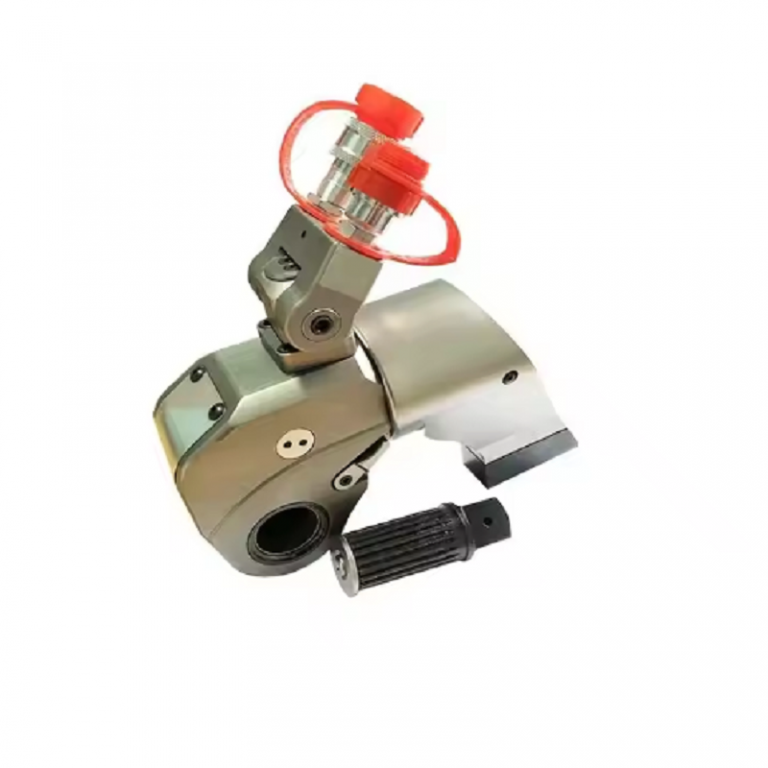
What are the technical difficulties of hydraulic torque wrench?
What are the technical difficulties of hydraulic torque wrench? A hydraulic torque wrench is a precise tool for tightening or loosening high-torque bolts, but in practice there are several technical difficulties and challenges that users and engineers often face: 1. Hydraulic System Issues•Leaks in hoses or fittings → cause loss of pressure and inconsistent torque output.•Seal wear → internal leakage reduces efficiency and torque accuracy.•Air in the hydraulic lines → makes the wrench “spongy” and less responsive.•Pump compatibility → different flow/pressure ratings may cause underperformance or even damage. 2. Torque Accuracy & Calibration•Pressure–torque relationship: torque is indirectly controlled by hydraulic pressure, so any variation in pump accuracy affects torque output.•Calibration drift: over time, wear in the cylinder, piston, or gauge causes deviations in torque.•Backlash/side loading: if the wrench isn’t perfectly aligned with the nut, torque may be inaccurate. 3. Mechanical & Operational Difficulties•Reaction arm stress: must press against a stable surface; otherwise, side-loading damages the tool or the joint.•Limited space: large hydraulic tools may not fit into tight bolt patterns (e.g., flanges).•Cycle time: multiple strokes are needed for each nut, making it slower